

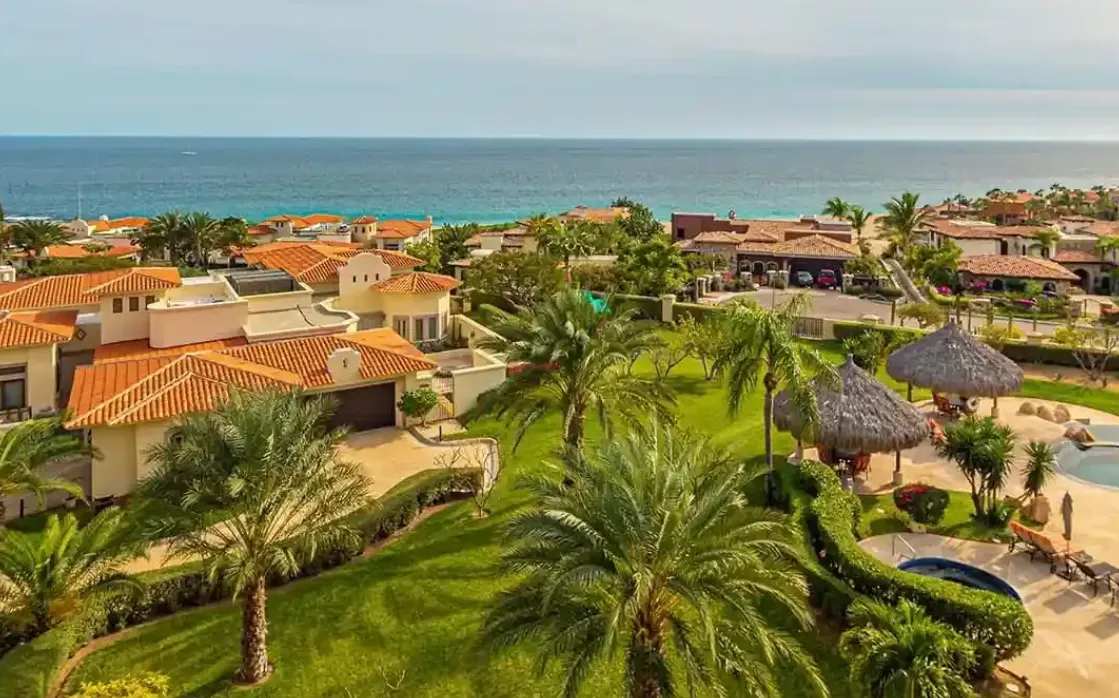
Property prices at the southern tip of the Baja California Peninsula have climbed roughly 60% over the past four years. That is not a typo. And yet, buyer inquiries from North America keep rising. The question worth asking is not whether Los Cabos is popular, it is whether 2025 is still a smart time to buy, or whether the window of obvious opportunity has already closed.
The honest answer is more nuanced than most market summaries let on. Some segments are genuinely overheated. Others remain undervalued relative to comparable coastal destinations in Florida, the Caribbean, or Mexico’s Pacific coast. Understanding which is which matters more right now than it ever has.
Why Los Cabos Keeps Attracting Foreign Capital
The fundamentals here are unusually strong for a resort market. Los Cabos benefits from year-round sunshine, direct international flights from over 30 North American cities, and a dual-city structure that gives buyers a real choice of lifestyle. Cabo San Lucas draws the energy and entertainment crowd. San José del Cabo has aged into something closer to a proper city, with arts, restaurants, and a slower pace that appeals to retirees and second-home buyers.
That combination has made the corridor consistently attractive to foreign investors. According to data tracked by Mexico’s National Association of Real Estate Professionals (AMPI), the Los Cabos region regularly ranks among the top three markets in the country for foreign property transactions. That demand has not cooled in 2025.
Tourism numbers reinforce this. Los Cabos International Airport saw passenger arrivals push past previous records in late 2024, and hotel occupancy rates in the corridor have held above 70% for most of the year. For buyers thinking about rental yield, those occupancy numbers matter because they translate directly into short-term rental income.
What Prices Are Actually Doing in 2025
The headline number obscures a lot. Average listing prices across the corridor sit above $600,000 USD for condos, but that average is heavily skewed by ultra-luxury developments in Pedregal, Palmilla, and the One&Only Palmilla corridor. Strip those out and the picture looks different.
Entry-level condos in areas like El Médano and the downtown Cabo San Lucas corridor still come in between $250,000 and $400,000 USD. Reasonably priced two-bedroom units with rental potential exist if buyers know where to look. The problem is that casual online searches surface the headline luxury product first, which distorts expectations before a buyer even speaks to an agent.
Pre-construction pricing remains one of the more defensible entry points. Developers in Los Cabos have historically delivered strong appreciation between the point of sale and completion, provided the developer is credible and the project is properly permitted. This is not guaranteed, and buyers should vet developers carefully, but the dynamic is real and documented across multiple completed projects in the last decade.
The Rental Market: What Yields Look Like Right Now
This is where Los Cabos genuinely separates itself from most Mexican coastal markets. Short-term rental demand is structural, not cyclical. The corridor draws high-spending travelers who book private villas and condos over hotels at a rate higher than almost anywhere else in the country.
Well-located properties in managed developments typically generate gross rental yields between 6% and 10% annually. Units in branded residences, think Four Seasons, Nobu Hotel, or Chileno Bay, often exceed that, though their purchase prices also reflect the premium. The net yield after platform fees, property management, and HOA costs tends to settle between 4% and 7% for most buyers, which compares favorably with comparable markets in Florida or coastal Spain.
The key variable is management. A property that sits unmanaged or is listed inconsistently on Airbnb and Vrbo will underperform. Properties plugged into professional management networks, many of which operate specifically within the Los Cabos corridor, perform markedly better. Buyers should ask hard questions about management infrastructure before committing to a specific development.
Legal Realities for Foreign Buyers in 2025
Foreign nationals cannot hold direct title to property within 50 kilometers of the Mexican coastline. That restriction is non-negotiable, but it has a straightforward solution: the fideicomiso, a bank trust that holds title on the buyer’s behalf. The buyer retains all rights of ownership, including the right to sell, rent, lease, and pass the property to heirs.
The fideicomiso is not a workaround or a loophole. It is the legally prescribed mechanism for foreign ownership in restricted zones, and it has functioned reliably for decades. Annual trust fees typically run between $500 and $700 USD, and the process is administered through Mexican banks regulated by the federal government.
What trips buyers up is not the trust itself, it is the steps surrounding it. The role of the notario público is often misunderstood. In Mexico, the notario is a government-appointed legal professional who oversees the transaction, verifies title, calculates taxes, and registers the deed. This is not the same as a notary public in the United States or Canada. Choosing an experienced notario with a track record in international transactions makes a material difference to how smoothly a closing goes.
For buyers who want a structured overview of how all of this fits together, MexHome publishes buyer education resources specifically designed for foreign nationals navigating the Los Cabos market, covering everything from trust setup to closing costs.
The Neighborhoods Worth Paying Attention To
Not every part of the corridor carries the same growth story. A few areas stand out right now.
Todos Santos and the Pacific Coast About 80 kilometers north of Cabo San Lucas, Todos Santos has quietly appreciated over the past five years while maintaining a much more accessible price point. Art galleries, boutique hotels, and a UNESCO-designated magical town designation have drawn a different buyer profile. Land and smaller casitas here represent genuine value relative to the corridor.
San José del Cabo’s Historic District The centro has gentrified steadily without losing its character. A two-bedroom home in the historic district still trades at a significant discount to a comparable condo in the Cabo San Lucas marina zone, despite offering a more liveable, less touristy experience.
The Corridor Between the Two Cities This stretch hosts the most significant new development activity. Gated communities, branded residences, and golf developments are concentrated here. It is the highest-priced zone but also the easiest to rent out short-term, which matters for buyers who want to offset carrying costs.
For a clearer picture of current listings and neighborhood pricing across these areas, the Los Cabos property search on MexHome breaks down inventory by type, location, and price point in a way that makes direct comparison straightforward.
Red Flags Buyers Should Take Seriously
The market’s growth has attracted developers and sellers who do not always operate to the same standard. A few specific risks are worth flagging.
- Unpermitted construction: Some properties, particularly older homes and budget condos, have additions or features that were never properly permitted. This creates complications at resale and occasionally voids certain types of insurance coverage.
- Ejido land: Agricultural communal land that has not been fully converted to private title carries significant legal risk and should be avoided unless a buyer has specialist legal counsel and a high risk tolerance.
- Developer track record: Pre-construction purchases are only as good as the developer behind them. Research completed projects, speak with buyers from previous phases, and verify that the land has clear title before paying a deposit.
- HOA financial health: In managed developments, a poorly funded HOA eventually means deferred maintenance and deteriorating common areas. Ask for audited HOA financials before purchasing.
Key Takeaways
- The Los Cabos property market has appreciated significantly, but entry-level and pre-construction segments still offer genuine value relative to comparable coastal destinations.
- Short-term rental yields between 4% and 7% net are realistic for well-managed properties, supported by structural tourism demand.
- The fideicomiso trust is the standard, legally sound mechanism for foreign ownership near the coast and has functioned reliably for decades.
- Neighborhood selection within the corridor matters enormously. Todos Santos and San José del Cabo’s historic center offer value that the headline Cabo San Lucas marina market does not.
- Developer vetting, notario selection, and HOA due diligence are the three areas where buyers most commonly get caught out.
Frequently Asked Questions
Can foreigners own property outright in Los Cabos? Foreign nationals can own property in Los Cabos through a fideicomiso, a bank trust established under Mexican federal law. The buyer holds all practical ownership rights including selling, renting, and inheritance. Direct title is not available within the coastal restricted zone, but the fideicomiso is a fully legitimate and widely used alternative.
What is the realistic total cost beyond the listing price? Buyers should budget an additional 4% to 7% of the purchase price to cover closing costs. This typically includes acquisition tax (around 2%), notario fees, trust setup costs, and registration. These costs are generally paid by the buyer in Mexico, not split between parties as is common in North American transactions.
Is Los Cabos still good for rental income in 2025? Yes, provided the property is well-located and professionally managed. The corridor consistently delivers some of the strongest short-term rental performance in Mexico due to high-spending tourism and reliable year-round demand. The management setup matters as much as the property itself.
How long does a typical purchase take to close? Most transactions in Los Cabos close within 30 to 60 days from the date of a signed purchase agreement, assuming financing is not involved. Cash purchases can sometimes close faster. The notario process, bank trust establishment, and government filings are the main timeline drivers.
What is the difference between buying in Cabo San Lucas versus San José del Cabo? Cabo San Lucas carries higher price points and stronger short-term rental demand from leisure tourists. San José del Cabo offers a more residential feel, slightly lower prices, and tends to attract longer-term rentals and buyers seeking a more settled lifestyle. Both are part of the same municipality and share infrastructure, but they serve different buyer priorities.
Final Thoughts
The Los Cabos property market in 2025 is not the obvious arbitrage play it was five years ago. Prices have moved, competition among buyers has increased, and the days of finding undervalued beachfront for a fraction of Florida prices are largely over in the prime zones.
That said, the underlying case for buying here remains solid. The rental market is structural, the legal framework for foreign ownership is clear, and there are still neighborhoods and property types that offer genuine value if buyers look past the glossy marina developments.
The buyers who do well in this market tend to be the ones who slow down, get specific about their goals, and work with people who actually know the corridor. The data points toward opportunity. But as with any real estate decision, the details matter more than the headline.

Alan Abel is a naming specialist and author at BoldlyNames, with over five years of experience in name research and selection. He helps readers choose meaningful, culturally aware, and well-suited names for people, brands, and projects. Alan’s work combines practical insight, linguistic understanding, and real-world naming trends to deliver clear, reliable guidance readers can trust.