

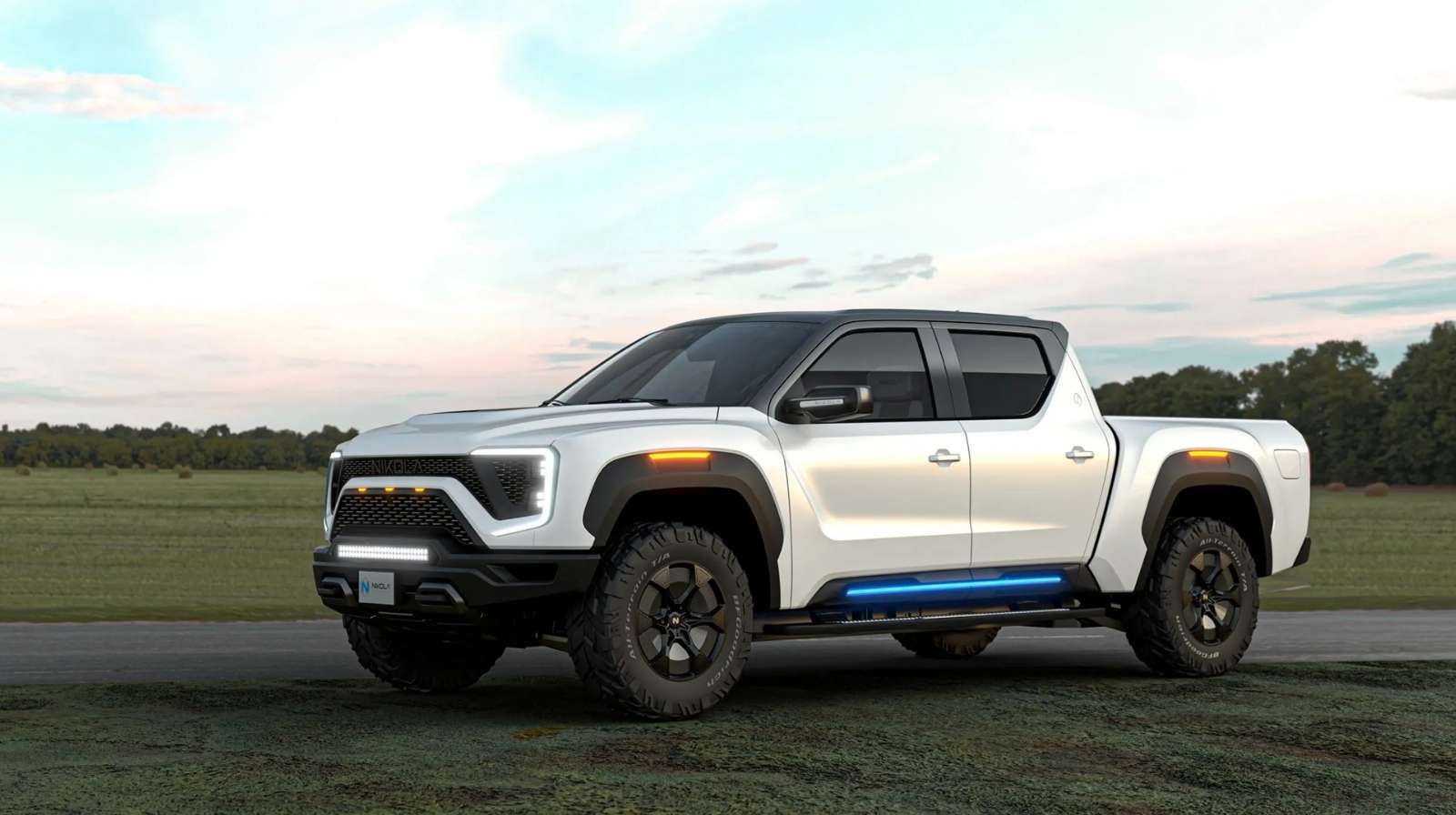
The story of Nikola Badger is one of ambition, innovation, and controversy in the electric vehicle industry. Nikola Motor promised to revolutionize the U.S. truck market with a powerful electric pickup truck that could compete with giants like the Tesla Cybertruck, Ford F-150 Lightning, and Rivian R1T. The Badger was pitched as a hybrid between a battery-electric vehicle (BEV) and a hydrogen fuel-cell truck, offering both versatility and sustainability for drivers who wanted something different from conventional gas trucks. Fans and investors were initially excited about the bold vision, but as time passed, a series of challenges, controversies, and a key failed partnership led to the ultimate project cancelled status of the Nikola Badger.
While the Badger never reached production, its story still teaches important lessons about the risks and rewards of entering the commercial trucks market as a new EV startup. Nikola aimed to combine high performance, long range, and rugged off-road performance with a futuristic design, but the path from concept to reality proved far more complicated than expected. The company’s journey shows how credibility, trust, and realistic execution are just as important as vision in the competitive world of electric pickup trucks.
The Idea Behind the Nikola Badger
Nikola Motor introduced the Badger with the promise of delivering a hybrid electric vehicle that could offer both BEV and fuel-cell electric vehicle (FCEV) options. The idea was simple but ambitious: create an electric pickup truck capable of long-range travel, impressive power, and strong towing performance for the U.S. market. Nikola envisioned the Badger as a direct competitor to the Tesla Cybertruck, Rivian R1T, and Ford F-150 Lightning, offering drivers a truck that could handle daily commutes, work duties, and weekend adventures.
Trevor Milton, the founder of Nikola, often described the Badger as a “revolution in the pickup truck world,” promising a blend of modern technology, hydrogen infrastructure readiness, and sustainability. The concept aimed to appeal to environmentally conscious truck owners, off-road enthusiasts, and businesses looking for commercial trucks with reduced carbon footprints. Unfortunately, the ambitious nature of this vision also opened the door to scrutiny and challenges that would later shape the project’s fate.
Key Specifications
The Nikola Badger was designed to impress with powerful performance and flexible energy options. According to company announcements and prototypes, the truck would have offered a 300 miles range as a BEV and up to 600 miles range with a hydrogen fuel-cell system. The 906 horsepower electric motor promised quick acceleration and strong towing capabilities, making it competitive in both urban and rugged environments. Nikola also highlighted off-road performance, allowing the Badger to navigate challenging terrain while maintaining comfort and stability.
| Specification | Nikola Badger (Planned) | Competitors |
| Range | 300 miles (BEV) / 600 miles (FCEV) | Tesla Cybertruck: 500 miles, Rivian R1T: 314 miles, Ford F-150 Lightning: 320 miles |
| Horsepower | 906 hp | Tesla Cybertruck: 800 hp, Rivian R1T: 750 hp, F-150 Lightning: 563 hp |
| Towing Capacity | 8,000+ lbs | Cybertruck: 14,000 lbs, Rivian: 11,000 lbs, F-150 Lightning: 10,000 lbs |
| Drive Type | AWD | AWD |
| Energy Type | BEV / FCEV | BEV |
| Charging Time | ~1 hour fast charge (BEV) | Varies |
Design and Features
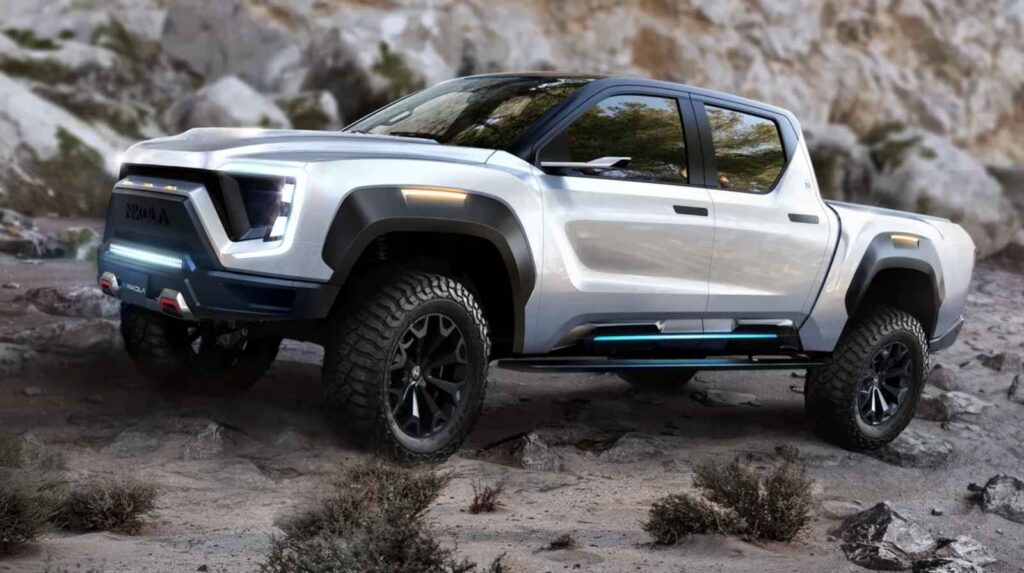
The Nikola Badger combined rugged truck styling with modern, futuristic touches. Its exterior design showcased bold lines and a muscular stance to appeal to traditional truck buyers while signaling a new era in electric pickup trucks. Inside, the cabin promised cutting-edge technology, including a digital dashboard, infotainment system, and smart safety features. Nikola also emphasized sustainability, suggesting the use of recycled and eco-friendly materials wherever possible.
Design features like modular bed storage, customizable interiors, and advanced off-road systems were meant to make the Badger stand out in the crowded EV pickup market. The truck was intended to balance utility and style, competing not only with the Tesla Cybertruck’s futuristic look but also with the practical functionality of the Ford F-150 Lightning and Rivian R1T. While visuals and concept models were shared widely, some critics questioned whether the final design could match the promises made in marketing demonstrations.
The Partnership with General Motors
A major turning point in the Nikola Badger story was the announcement of a General Motors partnership, which Nikola described as a way to accelerate production and reduce costs. GM was supposed to help manufacture the Badger, supply batteries, and provide engineering support. Initially, this collaboration seemed to validate Nikola’s ambitions, signaling to investors and the public that the company had secured a major industry ally.
However, the partnership quickly became complicated. Reports emerged that the collaboration would not result in full-scale production as initially promised. Nikola’s reliance on GM raised questions about the feasibility of its ambitious timeline and whether the company could deliver a fully functional hydrogen fuel-cell truck and battery-electric vehicle (BEV) option simultaneously. The fallout of this partnership contributed to the eventual project cancelled status of the Badger and shook investor confidence in Nikola Motor.
The Controversies Around Nikola
Nikola’s rise was shadowed by multiple controversies. The most high-profile involved allegations of misleading demonstrations and inflated claims made by founder Trevor Milton. The company faced accusations that certain prototype videos exaggerated the Badger’s capabilities, raising doubts about credibility and trust. Investor controversies also erupted as federal investigations questioned whether Nikola had misled shareholders about production readiness, technology, and partnerships.
This turbulent period damaged Nikola’s reputation in the electric vehicle industry. Headlines about alleged fraud and deceptive demonstrations made it difficult for the company to maintain public confidence, and potential customers began to hesitate about committing to a truck that had not yet materialized. The controversies demonstrated how critical transparency and credibility are in the fast-moving EV market.
The Cancellation of the Badger
In September 2020, Nikola officially announced the cancellation of the Badger. Several factors led to this decision, including the fallout from the General Motors partnership, financial pressures, and lingering controversies around company leadership. Nikola’s leadership stated that continuing the Badger project would strain resources and divert attention from other key initiatives, such as hydrogen-powered semi-trucks.
The cancellation disappointed many fans who had eagerly awaited the electric pickup truck with long range and impressive off-road performance. Analysts noted that the decision reflected the challenges new EV companies face in delivering advanced vehicles while managing investor expectations and industry scrutiny.
Comparison With Other Electric Pickups
Even though the Badger never reached production, it is useful to compare its planned specifications with other notable EV pickups. Against the Tesla Cybertruck, Nikola promised more versatile energy options through BEV and fuel-cell electric vehicle (FCEV) capabilities. Compared to the Ford F-150 Lightning, the Badger aimed for higher horsepower and off-road capability. The Rivian R1T, marketed for adventure and utility, shared some similar features, but Nikola claimed superior towing and optional hydrogen range.
This comparison highlights the missed opportunity for Nikola to compete in a growing EV market. While the Badger had potential, timing, credibility issues, and execution ultimately left it behind competitors that moved faster and more reliably to production.
What Made the Nikola Badger Stand Out Among Electric Pickups?
The Nikola Badger aimed to differentiate itself from other electric pickup trucks with its dual energy approach. Unlike typical battery-electric vehicles (BEV), the Badger was planned as a hybrid electric vehicle that could also operate as a hydrogen fuel-cell truck (FCEV). It promised a combination of long-range capability, with up to 600 miles range on hydrogen, and strong performance with 906 horsepower. Its design focused on rugged off-road performance and modern technology in the cabin. These features positioned it as a versatile option for both everyday drivers and commercial trucks, offering flexibility competitors like the Tesla Cybertruck and Ford F-150 Lightning could not provide.
Why the Nikola Badger Still Matters
The story of the Nikola Badger is not just about failure. It matters because it influenced the direction of electric pickup trucks and hybrid electric vehicles in the U.S. market. Nikola’s ambitious vision pushed competitors to consider hydrogen fuel-cell technology and longer-range solutions. Even though the project was cancelled, the ideas behind the Badger helped spark conversation about alternative fuels, sustainability, and the potential of commercial trucks powered by BEV and FCEV systems.
Why Was the Nikola Badger Project Cancelled?
The cancellation of the Nikola Badger was the result of multiple challenges. The breakdown of the General Motors partnership removed crucial production support and access to advanced battery technology. Investor confidence dropped amid controversies around misleading demonstrations and allegations involving founder Trevor Milton, raising questions about credibility and trust. Financial pressures, regulatory hurdles, and the complex integration of hydrogen fuel-cell technology with BEV capabilities further complicated the project. Despite promising specifications like 300 miles range as a BEV and high towing capacity, Nikola ultimately deemed the project unsustainable, prioritizing semi-truck initiatives and leaving the Badger as a notable case in EV development history.
Lessons From the Nikola Badger
The Nikola Badger teaches valuable lessons for startups, investors, and consumers. First, transparency and credibility are essential; misleading demonstrations and overpromising can quickly erode trust. Second, partnerships with major automakers like General Motors can accelerate development but also create dependencies that may limit autonomy. Finally, realistic timelines, clear technology development, and market understanding are crucial for success in the competitive electric vehicle industry.
The Current Status of Nikola
Today, Nikola Motor continues to focus on hydrogen-powered semi-trucks and other EV initiatives. The company has moved past some of the controversies but still faces skepticism from investors and industry observers. Nikola has highlighted progress in hydrogen infrastructure, vehicle prototypes, and partnerships in the commercial sector. While the Badger is gone, the company is betting on FCEV technology as a differentiator in a market dominated by BEVs, and it continues to evolve in the electric vehicle industry.
Could the Nikola Badger Influence Future Electric Pickups?
Even though the Nikola Badger never reached production, its concept continues to impact the electric vehicle industry. By promoting a hybrid electric vehicle design combining BEV and fuel-cell electric vehicle (FCEV) options, Nikola inspired competitors to explore alternative energy solutions. The Badger highlighted the importance of long-range capability, off-road performance, and flexible energy options for the U.S. electric pickup truck market. Lessons from its development emphasize the need for transparency, reliable partnerships, and realistic timelines. Future EV startups may adopt aspects of the Badger’s technology and vision, demonstrating that even project cancelled vehicles can leave a lasting mark on industry innovation.
FAQs
What was the Nikola Badger?
The Nikola Badger was an electric pickup truck concept by Nikola Motor, planned as a dual-energy BEV and hydrogen fuel-cell truck, intended to compete with Tesla Cybertruck and Rivian R1T.
Who founded Nikola Motor?
Nikola Motor was founded by Trevor Milton in 2014, aiming to develop hydrogen infrastructure and electric trucks for the commercial and consumer vehicle markets.
Why was the Nikola Badger cancelled?
The Badger was cancelled in 2020 due to financial pressures, the collapse of the General Motors partnership, and controversies over misleading claims and executive credibility.
What was the planned range of the Nikola Badger?
The Nikola Badger was expected to achieve 300 miles range as a battery-electric vehicle (BEV) and up to 600 miles range with hydrogen fuel-cell technology.
How much horsepower was the Nikola Badger supposed to have?
The planned Badger would deliver 906 horsepower, providing strong acceleration, towing capability, and competitive performance compared to other electric pickup trucks.
Did Nikola plan hydrogen fuel-cell trucks before the Badger?
Yes, Nikola Motor focused on fuel-cell electric vehicles (FCEV), particularly hydrogen-powered semi-trucks, and intended the Badger to combine hydrogen technology with a battery-electric vehicle (BEV).
Was the Nikola Badger ever produced?
No, the Nikola Badger never entered production. The project was officially cancelled in 2020 before manufacturing due to technical, financial, and partnership challenges.
Which companies were Nikola Badger’s main competitors?
Competitors included the Tesla Cybertruck, Ford F-150 Lightning, and Rivian R1T, all offering electric pickups with strong range, performance, and growing market presence.
Did the Nikola Badger have off-road capabilities?
Yes, the Badger was planned with off-road performance, designed for rugged terrain, towing, and heavy-duty applications while supporting both BEV and hydrogen fuel-cell options.
What happened to Nikola Motor after the Badger cancellation?
Nikola Motor shifted focus to hydrogen-powered semi-trucks, improving hydrogen infrastructure, while addressing investor controversies and continuing development of commercial fuel-cell electric vehicles (FCEV).
Conclusion
The Nikola Badger represents both ambition and cautionary lessons in the world of electric pickup trucks. Promising long range, 906 horsepower, off-road performance, and dual BEV/FCEV options, it captured attention but ultimately became a project cancelled case study. Its journey highlights the importance of credibility and trust, careful partnerships, and realistic planning. Even without reaching production, the Badger continues to influence competitors and reminds the electric vehicle industry that innovation must always be paired with transparency and execution. For the U.S. market, the story of Nikola Badger will remain a fascinating chapter in the evolution of electric pickup trucks and hybrid electric vehicles.

Alan Abel is a naming specialist and author at BoldlyNames, with over five years of experience in name research and selection. He helps readers choose meaningful, culturally aware, and well-suited names for people, brands, and projects. Alan’s work combines practical insight, linguistic understanding, and real-world naming trends to deliver clear, reliable guidance readers can trust.