

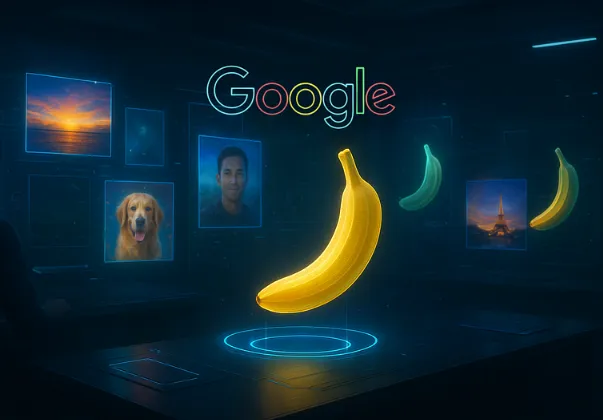
Artificial intelligence is reshaping digital workflows across industries. From text generation to visual content, businesses are increasingly adopting AI to automate manual tasks and drive productivity. One of the most notable developments in this space is Google Banana AI, often referred to simply as Nano Banana — Google’s advanced image generation and editing model built on Gemini technologies. While it’s widely used for creative image tasks, its underlying capabilities point toward broader use cases for businesses seeking automation, brand consistency, and time savings on visual content production.
What Is Google Banana AI and Why It Matters for Business
At its core, Google Banana AI is an artificial intelligence model designed to generate and edit images using natural language instructions. The model was initially introduced under the codename Nano Banana and is powered by Google’s Gemini AI technologies, including versions tuned for fast, high-quality visual synthesis and editing.
Unlike conventional photo editors that require manual selection, masking, and adjustment tools, Google Banana AI interprets text inputs like “change the background to white” or “turn this portrait into a professional headshot,” and executes the result fluently. Businesses no longer need to rely solely on traditional image editing skills — rather, automated workflows help save time and allocate resources to strategic priorities.
Here’s why Google Banana AI is especially relevant to business environments:
- Automated creative workflows: Natural language prompts replace manual editing steps.
- Consistent brand visuals: Images can be aligned with brand standards automatically.
- Reduced reliance on designers: Teams with limited design resources can still produce professional visuals.
- Rapid content iteration: Multiple variations can be generated quickly for A/B testing or marketing campaigns.
These capabilities make Google Banana AI attractive for marketing departments, creative studios, e-commerce brands, and internal communications teams who need visuals at scale.
Business Use Cases for Google Banana AI
To understand the practical value of this technology, let’s break down how companies are leveraging Google Banana AI in different operational areas.
1. Brand Visual Assets and Product Photography
E-commerce and retail brands constantly need updated product visuals for websites, marketplaces, catalogs, and advertisements. Instead of organizing expensive photoshoots each time a product is refreshed, companies can use Google Banana AI to update backgrounds, harmonize lighting, and standardize imagery for brand consistency.
For example:
- Replacing diverse backgrounds with a unified visual style
- Isolating products and refining edges
- Generating variations for social ads
These edits can be automated using natural language prompts, enabling teams to iterate rapidly.
2. Marketing Campaign Production
Campaign visuals — whether static or video — often require multiple versions tailored to different channels. With Google Banana AI at the core of creative systems, teams can generate campaign imagery across themes quickly, enabling:
- Fast prototyping of visuals before committing to finalized designs
- Multiple creative variations for audience testing
- Visuals for landing pages, banners, email headers, and social media
This capability reduces bottlenecks in creative development and shortens go-to-market cycles.
3. Content Personalization for Localization
Global businesses operate in multiple markets, each with unique cultural and linguistic expectations. Using AI for generating localized visuals helps:
- Adapt imagery to regional norms
- Produce localized campaign graphics at scale
- Support multilingual presentations and product imagery
Where traditionally localized creative assets required manual editing for each variant, AI greatly reduces this effort.
4. Internal Communications and Employee Engagement
Internal teams often create presentations, internal reports, and dashboard visuals. Google Banana AI can assist by:
- Creating unified visual themes for slides
- Editing headshots for internal directories
- Generating quick visuals for strategy documents
This automation streamlines routine tasks that would otherwise require designers or additional tools.
5. Supporting Visual Identity in Video Projects
Businesses increasingly use video to tell stories online. While Google Banana AI focuses on images, its outputs feed into broader production ecosystems. For example, companies that create videos using an AI-generated video app might use AI-edited imagery as frames, backgrounds, or visual assets in motion content. When still images are needed for animation, scene setting, or brand elements, Nano Banana-generated assets integrate smoothly into video workflows.
AI generated video app tools can then take these visuals and expand them into dynamic narrative assets — further automating content creation. This intersection between still image AI and video automation significantly enhances productivity for marketing and training teams.
5 Best Tools Leveraging Google Banana AI
Below are five tools that incorporate Google Banana AI or similar advanced visual automation models to help businesses streamline content creation. Each tool is presented with a consistent structure and business-relevant applications:
1. Invideo – AI-Driven Visual Generator
Overview:
Invideo integrates Nano Banana Pro for automated image generation and editing, making it a powerful solution for teams exploring innovations like google banana ai. It enables businesses to produce high-quality visuals from natural language prompts and uploaded source material, streamlining creative workflows and accelerating content production at scale.
Capabilities:
- Natural language editing of images
- Visual refinement for marketing assets
- Customizable backgrounds and lighting
- Export is ready for digital use
Use Cases:
- Product content for e-commerce pages
- Campaign visual graphics
- Corporate image assets
2. ImageCraft AI – Automated Creative Visual Engine
Overview:
ImageCraft AI helps businesses transform ideas into professional visuals using prompt-based image generation and editing systems.
Capabilities:
- Prompt-based image generation
- Consistent style application
- Exportable high-resolution files
Use Cases:
- Visual brand identity creation
- Marketing asset variation
- Illustrative visuals for blogs and ads
3. BrandFrame AI – Corporate Visual Standardization
Overview:
BrandFrame AI assists teams with generating consistent visual styles across departments — from product pages to internal presentations.
Capabilities:
- Standardization presets
- Background and framing controls
- Bulk generation support
Use Cases:
- Unified team photos
- Corporate presentation visuals
- Organized aesthetic themes
4. CreativeBatch – Bulk Visual Generation Platform
Overview:
CreativeBatch is designed for bulk content generation, enabling businesses to generate large numbers of visuals from common prompts.
Capabilities:
- Batch prompts and generation
- Output management tools
- High-resolution export
Use Cases:
- Seasonal campaign assets
- Product catalog visuals
- Multi-platform creative sets
5. VisualSync AI – Cross-Channel Visual Creator
Overview:
VisualSync AI creates visual assets that align with specific channel requirements — web banners, mobile formats, and social layouts.
Capabilities:
- Format-aware generation
- Prompt-based design direction
- Consistent branding across outputs
Use Cases:
- Social media visuals
- Digital campaign ad creatives
- Content for blogs and newsletters
How to Integrate Google Banana AI Into Your Business Workflow
1. Define Visual Requirements
Determine what types of visuals your team needs — product photos, banners, headshots, or social graphics. This clarity helps shape prompt inputs and automation strategies.
2. Create Prompt Standards
Develop internal guidelines for writing prompts. Clear descriptions (mentioning style, mood, lighting, and context) result in outputs closer to your brand vision.
3. Establish Output Review Processes
Although AI models streamline production, set review standards to ensure all visuals meet brand guidelines before publication.
4. Combine With Broader Automation Tools
Pair Nano Banana-enabled tools with content schedulers, AI generated video app tools, and analytics systems to drive fully automated content pipelines.
5. Monitor Performance and Iteration
Track which visuals perform best (e.g., campaign engagement) and refine prompt and style guidelines over time.
Challenges and Considerations
While Google Banana AI and its integrations offer significant benefits, it’s important to consider:
Data Privacy
Ensure sensitive visual assets are handled securely and stored according to company policies.
Model Limitations
AI interpretation isn’t perfect — some prompts may require refinements or multiple iterations.
Brand Consistency
Even with automation, human oversight is necessary to maintain brand voice and aesthetic integrity.
Conclusion
Google Banana AI represents a shift toward automated, efficient visual content production. By integrating natural language protocols and AI image synthesis, businesses can automate tasks previously requiring dedicated design resources — saving time and enhancing productivity. Tools like Invideo and others on this list show how Nano Banana-based models can be applied to real business needs, including campaign visuals, product imagery, and corporate branding.
When paired with broader content automation systems — including an video maker app — companies can build end-to-end workflows that handle everything from image generation to motion content, reducing production bottlenecks and freeing teams to focus on strategic storytelling and engagement.
As AI continues to evolve, early adopters of tools like Google Banana AI will be better positioned to produce professional, brand-aligned visuals at speed and scale.

Alan Abel is a naming specialist and author at BoldlyNames, with over five years of experience in name research and selection. He helps readers choose meaningful, culturally aware, and well-suited names for people, brands, and projects. Alan’s work combines practical insight, linguistic understanding, and real-world naming trends to deliver clear, reliable guidance readers can trust.