

You’re halfway up a mountain trail.
Trees everywhere. No roads. No cell bars.
Someone in your group lifts a walkie-talkie and asks the obvious question:
“Wait… do these still work if there’s no signal?”
Everyone pauses.
Because smartphones have trained us to believe that every communication device depends on a cell tower somewhere nearby. No tower, no connection. End of story.
But walkie-talkies play by different rules.
And depending on the type you’re using, the answer to that question can be either “of course”… or “well, it depends.”
Classic Walkie-Talkies Don’t Need Cell Service
Let’s start with the original version.
Traditional walkie-talkies communicate using radio frequencies, not cellular networks. Two devices send signals directly to each other through the air.
No towers.
No Wi-Fi.
No data plan.
Just radio waves traveling between devices.
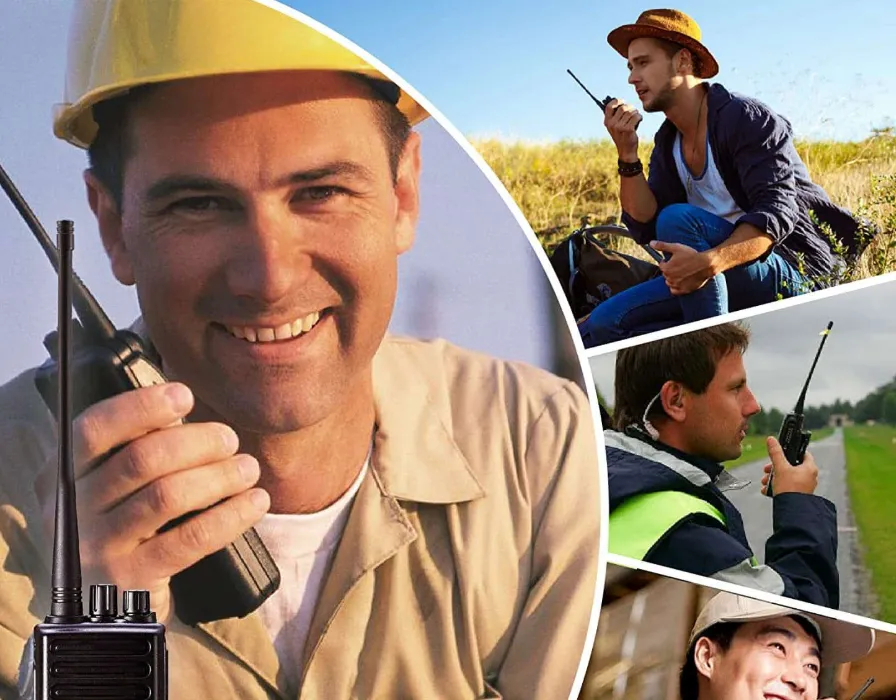
That’s why walkie-talkies are commonly used in places where phones struggle—construction sites, hiking trails, warehouses, ski slopes, and emergency response operations.
Press the button. Speak. The other radio hears you.
Simple system. Surprisingly reliable.
And honestly? There’s something satisfying about technology that still works when everything else loses signal.
There’s Just One Catch: Range
Here’s the trade-off.
Because traditional walkie-talkies communicate directly with each other, their range is limited. Once the signal travels too far—or runs into obstacles—the connection weakens.
In ideal open terrain, some models can reach several miles.
In the real world?
Buildings, hills, dense forests, and urban structures tend to shorten that distance pretty quickly.
A few examples:
- Open outdoor spaces may allow longer communication range
- Cities with tall buildings often reduce signal strength
- Large indoor facilities can create interference
So while walkie-talkies work beautifully without cell service, they typically require users to stay within a certain distance of each other.
Great for teams working nearby.
Less ideal if your group spreads out across an entire region.
Modern Walkie-Talkies Took a Different Path
Technology, of course, hates limitations.
So newer communication systems evolved.
Some modern walkie-talkie devices still use push-to-talk communication—but instead of relying only on direct radio signals, they send messages through cellular networks.
What does that mean?
Distance stops being the problem.
Instead of a few miles, users can communicate across cities, states, or even nationwide—as long as cellular coverage exists.
For example, systems explained on this page about walkie-talkie communication combine traditional radio simplicity with modern network connectivity.
You still press a button and talk.
But the signal travels much farther.
When Cellular Walkie-Talkies Make More Sense
If everyone stays within a small area, traditional radios work perfectly.
But once teams start spreading out, the math changes.
Imagine these situations:
A construction company managing crews across multiple job sites.
A logistics company coordinating drivers across a city.
Security teams monitoring several large venues at once.
Families traveling in separate vehicles during long road trips.
Suddenly that three-mile radio range doesn’t feel very helpful.
Cellular-enabled walkie-talkies solve that problem by extending communication far beyond traditional radio limits.
Same simple push-to-talk experience.
Much bigger coverage area.
So… Do Walkie-Talkies Need Cell Service?
Here’s the honest answer.
Some do. Some don’t.
Traditional walkie-talkies:
- Work without cellular service
- Communicate directly using radio signals
- Have limited range
Modern network-based walkie-talkies:
- Use cellular infrastructure
- Support long-distance communication
- Maintain push-to-talk simplicity
Neither system is universally “better.” They’re simply built for different situations.
The Real Question Is How Far You Need to Talk
Before choosing a walkie-talkie, it helps to ask one simple question:
How far apart will the users be?
If the answer is “a few hundred yards” or “across a job site,” traditional radios may be perfect.
If the answer is “across a city” or “across the country,” cellular-powered systems start making a lot more sense.
Either way, walkie-talkies continue to offer something most modern devices struggle with:
Instant communication.
No typing.
No dialing.
No waiting.
Just a button—and a voice on the other end.

Alan Abel is a naming specialist and author at BoldlyNames, with over five years of experience in name research and selection. He helps readers choose meaningful, culturally aware, and well-suited names for people, brands, and projects. Alan’s work combines practical insight, linguistic understanding, and real-world naming trends to deliver clear, reliable guidance readers can trust.