

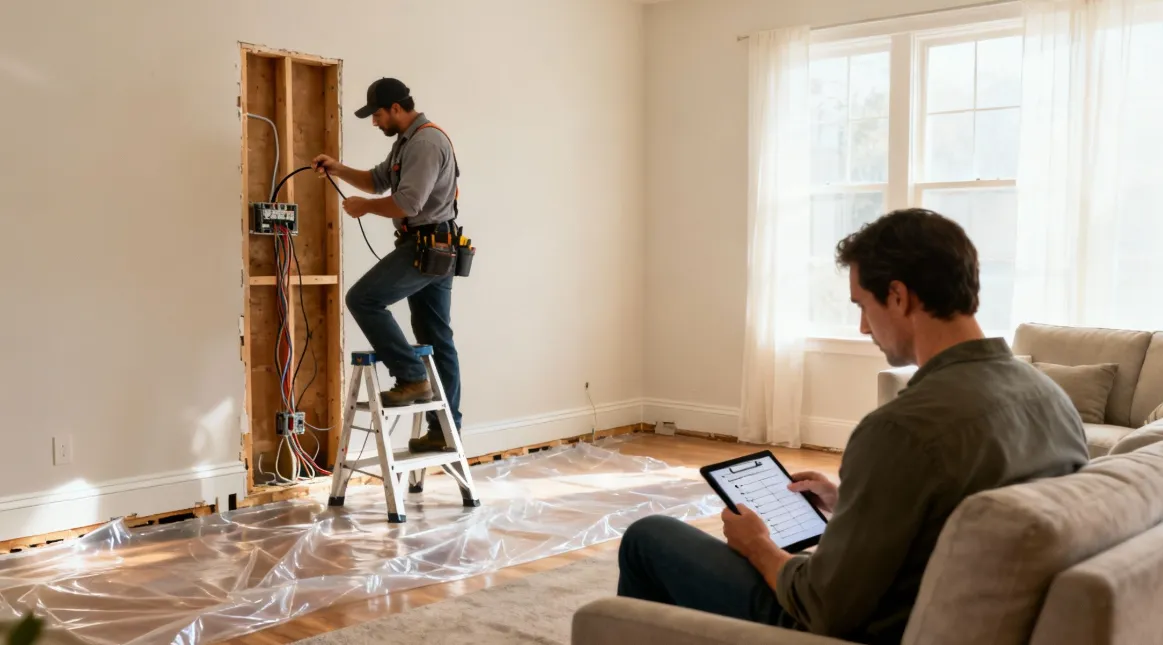
Most Houston homeowners get their first repipe quote and immediately wonder why two numbers from two different companies can be thousands of dollars apart. One contractor says $5,000. Another says $11,000. Both are quoting the same house. That gap is not random, and it is not just markup. It reflects completely different scopes of work, different materials, and different things that one quote simply does not include.
If you are trying to budget for a whole-house repipe, this guide breaks down every cost driver honestly, so you can read a quote and actually understand what you are paying for.
The Baseline: Why Repipe Pricing Is Not One-Size-Fits-All
Unlike replacing a water heater or installing a faucet, repiping a house is a whole-system project. The scope changes significantly based on your home’s size, age, layout, and the material being used. A 1,200-square-foot slab home in Pasadena is a fundamentally different job from a 3,500-square-foot two-story in Katy with a pier-and-beam foundation and a finished attic.
Companies that specialize in repiping, like Repipe Solutions Inc, price work based on fixture count rather than a flat home-size estimate. That method is more accurate because it reflects the actual number of connection points a crew needs to run, cap, and test.
The 6 Real Cost Drivers in Any Repipe Quote
1. Fixture Count
This is the primary pricing variable for most repipe specialists. Every fixture, toilet, sink, shower, tub, washing machine hookup, outdoor hose bib, ice maker line, requires a dedicated water line that needs to be replaced. A three-bedroom, two-bathroom home typically has 15 to 20 fixtures. A four-bedroom home with three bathrooms, a utility room, and a kitchen island can push 25 to 30.
Each additional fixture adds labor time, pipe footage, and fittings. Pricing by fixture count gives homeowners a clear, auditable number rather than a vague estimate based on square footage alone.
2. Home Square Footage and Layout
Square footage matters because it determines the total pipe footage needed, but layout matters just as much. A two-story home requires runs up through walls and across floors, which adds labor hours. A home where the bathrooms are spread across opposite ends of the house means longer pipe runs than a compact floor plan where the bathrooms are stacked.
Open-concept homes built in the last 20 years tend to be more accessible than older homes with dense, compartmentalized floor plans. Accessibility is its own cost variable.
3. Foundation Type and Pipe Accessibility
Slab foundations in Houston are extremely common, and they change the repipe approach considerably. With a slab home, new PEX lines are typically run through the walls, attic, or crawl spaces above the slab rather than through or under the concrete. The challenge is accessing wall cavities without causing excessive damage.
Pier-and-beam homes offer a different kind of access. Running pipe under the floor is often easier and causes less disruption to finishes. That said, older pier-and-beam homes in neighborhoods like Bellaire, Montrose, or the Heights can have cramped underfloor clearance that adds time.
Attic routing, wall cavity accessibility, and whether a home has a finished garage or utility room all factor into how long the job takes.
4. Pipe Material Choice
This is where quotes can diverge significantly, and where homeowners often do not realize they are comparing different products.
The most common options for residential repiping are:
- Copper: Durable and long-proven, but expensive. Material costs for copper have risen sharply over the last several years due to commodity pricing. A full copper repipe on a mid-size Houston home can run $10,000 to $16,000 or more.
- PEX-B: A cross-linked polyethylene pipe that is more affordable and flexible than copper. It is widely used and generally reliable, but it uses expansion or crimp fittings and has somewhat less flexibility than PEX-A.
- PEX-A (Uponor): The premium PEX option. PEX-A is made using a different cross-linking process that gives it more flexibility, better freeze resistance, and the ability to use Uponor’s ProPEX expansion fitting system, which creates a stronger, longer-lasting joint than crimp or clamp alternatives. It costs slightly more than PEX-B but offers meaningful performance advantages, particularly in Houston homes where thermal expansion and long pipe runs are common.
- CPVC: A rigid plastic pipe sometimes used as a copper alternative. It is less expensive than copper but more brittle than PEX and can crack over time, particularly in Texas’s temperature swings.
For most Houston homeowners replacing galvanized steel or aging copper, PEX-A is the material that hits the best balance of performance, longevity, and cost.
5. Permit Fees
In Texas, any whole-house repipe requires a permit from the local municipality, and the licensed plumber pulling the permit is responsible for the work passing inspection. Permit costs vary by jurisdiction, but in Houston and surrounding counties like Fort Bend, Montgomery, and Galveston, they typically run between $150 and $400.
Some low-ball quotes skip permits entirely. That is a red flag covered in detail below.
6. Drywall Repair and Paint
This is the most frequently excluded line item in low quotes, and it is the one that catches homeowners most off guard. Repiping requires access holes in walls and sometimes ceilings to reach and replace pipe runs. A standard whole-house repipe might involve 10 to 20 access cuts, depending on the layout.
Once the pipe work is done, those holes need to be patched, textured to match the existing wall finish, and painted. If a contractor does not include this work in the quote, you are getting a partial scope, and you will be coordinating and paying a separate drywall crew to finish the job.
What a Typical Houston Repipe Costs
Ballpark ranges vary based on everything above, but here is a realistic breakdown for Greater Houston homes:
| Home Size | Typical Fixture Count | Estimated Cost Range |
|---|---|---|
| 2-bed / 1-bath (under 1,200 sq ft) | 12 to 15 fixtures | $4,000 to $6,500 |
| 3-bed / 2-bath (1,200 to 2,000 sq ft) | 16 to 22 fixtures | $6,500 to $10,000 |
| 4-bed / 3-bath (2,000 to 3,000 sq ft) | 22 to 28 fixtures | $9,500 to $14,000 |
| Large or custom home (3,000+ sq ft) | 28+ fixtures | $12,000 to $16,000+ |
These ranges assume PEX-A material, permits, pressure testing, and drywall repair with paint included. A quote that comes in significantly below these numbers almost certainly excludes something.
For a more detailed look at financing options and how to structure a project around your budget, the cost-breakdown section on a repipe company’s site can help clarify what payment structures are available, including zero-interest options.
Red Flags in Low Quotes: What Is Usually Missing
Getting a quote that looks unusually low is not always good luck. Here is what experienced homeowners and real estate agents have learned to watch for.
No Permit Included
Any repipe that skips the permit is not just a legal risk, it is a liability. If unpermitted plumbing causes water damage later, insurance companies can deny the claim. When you sell the home, an inspector will find it. Ask every contractor directly: does this quote include pulling a permit and scheduling inspections?
No Drywall Restoration
If the quote does not explicitly mention drywall repair, patching, texture, and paint, assume it is not included. Some contractors offer a “courtesy patch” that leaves holes mismatched and unfinished. A proper scope includes finish-matching texture and paint, not just a dry patch.
Material Is Not Specified
Quotes that say “PEX repiping” without specifying PEX-A or PEX-B are leaving room for a cheaper product swap. Ask for the brand and grade of material before signing anything. Uponor PEX-A is the standard used by repipe specialists who stand behind long-term warranties.
No Warranty Detail
A “lifetime warranty” that is not transferable to a future buyer offers half the value. When a company backs its work with a transferable warranty, that carries real weight during a home sale. Ask whether the warranty is transferable and get it in writing.
Vague Labor Scope
Phrases like “repipe labor” without specifying the number of fixtures, access points, or pressure test procedures leave room for price adjustments once work begins. A proper quote lists fixture count, material spec, permit cost, drywall scope, and warranty terms.
Why Specialist Repipe Companies Often Deliver Better Value
Generalist plumbers do repipes occasionally. Repipe specialists do them every day. That distinction matters for a few reasons.
First, crew efficiency. A team that completes hundreds of repipes annually moves faster, cuts fewer access holes, and causes less disruption. That efficiency reduces labor hours, which reduces cost.
Second, material sourcing. High-volume repipe companies buy Uponor PEX-A and fittings at volume pricing. That savings often offsets the price premium over lower-grade materials used by competitors.
Third, end-to-end scope. When one company handles pipe, permits, pressure testing, drywall, and paint, you avoid the coordination cost and markup that comes with hiring two or three separate contractors.
Key Takeaways
- Fixture count is the most accurate way to price a repipe. Square footage alone is an unreliable baseline.
- PEX-A (Uponor) outperforms CPVC and PEX-B on flexibility, joint strength, and long-term durability. It is the material worth paying slightly more for.
- Permits, drywall repair, and paint are non-negotiable parts of a complete repipe scope. If they are not in the quote, the project is not finished.
- Low quotes almost always exclude something. Drywall restoration and permit fees are the most common omissions.
- A transferable lifetime warranty adds resale value and is a meaningful differentiator worth asking every contractor about.
Frequently Asked Questions
How long does a whole-house repipe take in Houston? Most mid-size Houston homes are repiped in one to two days. Water is typically restored at the end of each working day, so homeowners usually experience only a five to six hour outage rather than a multi-day disruption.
Does my homeowner’s insurance cover a repipe? Most standard homeowner’s policies do not cover repiping due to age or wear. However, if a repipe is required following sudden water damage (such as a burst pipe or slab leak), some portion may be covered. Check your specific policy and document the existing pipe condition before work begins.
What is the difference between PEX-A and PEX-B for a Houston home? PEX-A uses a more flexible cross-linking method and works with Uponor’s ProPEX expansion fittings, which create stronger joints than the crimp or clamp connections used with PEX-B. For Houston homes with long pipe runs and significant temperature variation, PEX-A’s flexibility and joint integrity make it the more durable option.
Do I need to leave my home during a repipe? Generally, no. Most repipe crews work through the house systematically and restore water before leaving each day. Homeowners can stay in the home throughout the process, though expect noise and periodic water shutoffs during working hours.
How do I compare two repipe quotes accurately? Line them up against the same checklist: fixture count covered, pipe material and brand, permit inclusion, drywall and paint scope, warranty type (and whether it is transferable), and timeline. Two quotes for the same house should be compared on scope, not just price.
Before You Sign Anything
Understanding what drives repipe costs protects you from budget surprises and helps you ask the right questions before any work begins. A quote that accounts for fixtures, materials, permits, and full restoration is the only kind worth accepting.
If you are in the Houston area and want a no-obligation estimate with all of that spelled out upfront, the team at repipe solutions provides free on-site assessments with itemized quotes, so there are no line items left to the imagination.

Alan Abel is a naming specialist and author at BoldlyNames, with over five years of experience in name research and selection. He helps readers choose meaningful, culturally aware, and well-suited names for people, brands, and projects. Alan’s work combines practical insight, linguistic understanding, and real-world naming trends to deliver clear, reliable guidance readers can trust.