

It starts small.
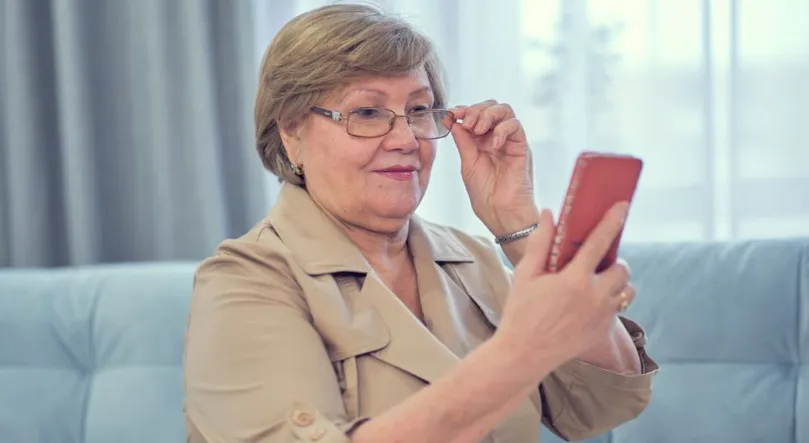
A quick glance at your phone turns into a longer stare. Reading a label requires better lighting. You blink more. Adjust more. Maybe even sigh a little.
Nothing dramatic, just a growing sense that your eyes aren’t as… cooperative.
That’s often the quiet arrival of presbyopic changes.
The Slow Build of Visual Fatigue
Here’s the tricky part: being presbyopic isn’t just about blur.
It’s about effort.
Your eyes used to switch focus instantly, far to near, near to far, without asking for permission. Now, that process takes longer. The lens inside your eye has stiffened with age, making it harder to adjust for close-up tasks.
So your eyes compensate.
They strain. They refocus. They try again.
And over time, that effort adds up.
Daily Life Gets… Slightly Harder
Not impossible. Just harder than it should be.
You notice it in places you didn’t expect:
- Reading messages on your phone
- Checking prices at a store
- Working on a laptop for extended periods
- Glancing at small print in dim lighting
Each task comes with a micro-delay, a fraction of a second where your eyes search for clarity.
Individually? Manageable.
Repeated all day? Exhausting.
Why Comfort Takes a Hit
Visual comfort isn’t just about seeing clearly. It’s about how easily you get there.
When you’re presbyopic, your eyes are constantly negotiating focus. That repeated effort can lead to:
- Eye strain or fatigue
- Mild headaches after screen use
- Increased sensitivity to lighting conditions
- A tendency to squint or adjust posture frequently
You might not even connect these symptoms to your vision at first. It feels like general tiredness.
But your eyes are doing more work than they used to.
The “Arm Stretch” Phenomenon
Let’s talk about the classic move.
You hold something farther away to see it better. Then a little farther. Then… okay, that’s as far as your arm goes.
It’s almost universal.
This instinctive adjustment is your body’s workaround for reduced near focus. By increasing distance, you’re helping your eyes find a point where they can still achieve clarity.
Clever? Yes.
Convenient? Not really.
Adapting to the Shift
Most people don’t ignore these changes, they adapt.
Reading glasses become part of the routine. Screen brightness gets adjusted. Fonts get bigger. Lighting becomes more important than ever.
These are all forms of managing presbyopic vision.
But they also introduce friction.
You rely on tools. You adjust your environment. You plan around your vision instead of the other way around.
A More Flexible Approach to Comfort
Recently, there’s been a shift toward solutions that reduce that friction rather than add to it.
Some approaches, like ophthalmic drops, aim to improve near focus temporarily by adjusting how light enters the eye. Instead of external correction, they work with the eye’s existing structure to enhance clarity during close-up tasks.
It’s not a permanent fix. But that’s part of the appeal.
You use it when needed. Skip it when you don’t.
Platforms like VIZZ reflect this evolving mindset, focusing on everyday usability rather than rigid, one-size solutions.
Because modern life doesn’t happen at one fixed distance.
The Long-Term Impact of Ignoring It
Here’s something worth considering: discomfort tends to compound.
If presbyopic changes aren’t addressed, the strain doesn’t just stay the same, it often increases. Tasks feel more tiring. Focus becomes less reliable. You may even start avoiding activities that require sustained near vision.
Not because you can’t do them, but because they’re no longer easy.
And ease matters more than we admit.
Final Thought: Comfort Is the Real Goal
Clear vision is important. But comfortable vision? That’s what shapes your day.
Being presbyopic doesn’t mean losing clarity altogether, it means working harder to achieve it. The goal of any solution, whether glasses, lifestyle adjustments, or newer options, is to reduce that effort.
To make seeing feel natural again.
Because at the end of the day, your eyes shouldn’t feel like they’ve been working overtime just to get through a text message.

Alan Abel is a naming specialist and author at BoldlyNames, with over five years of experience in name research and selection. He helps readers choose meaningful, culturally aware, and well-suited names for people, brands, and projects. Alan’s work combines practical insight, linguistic understanding, and real-world naming trends to deliver clear, reliable guidance readers can trust.