

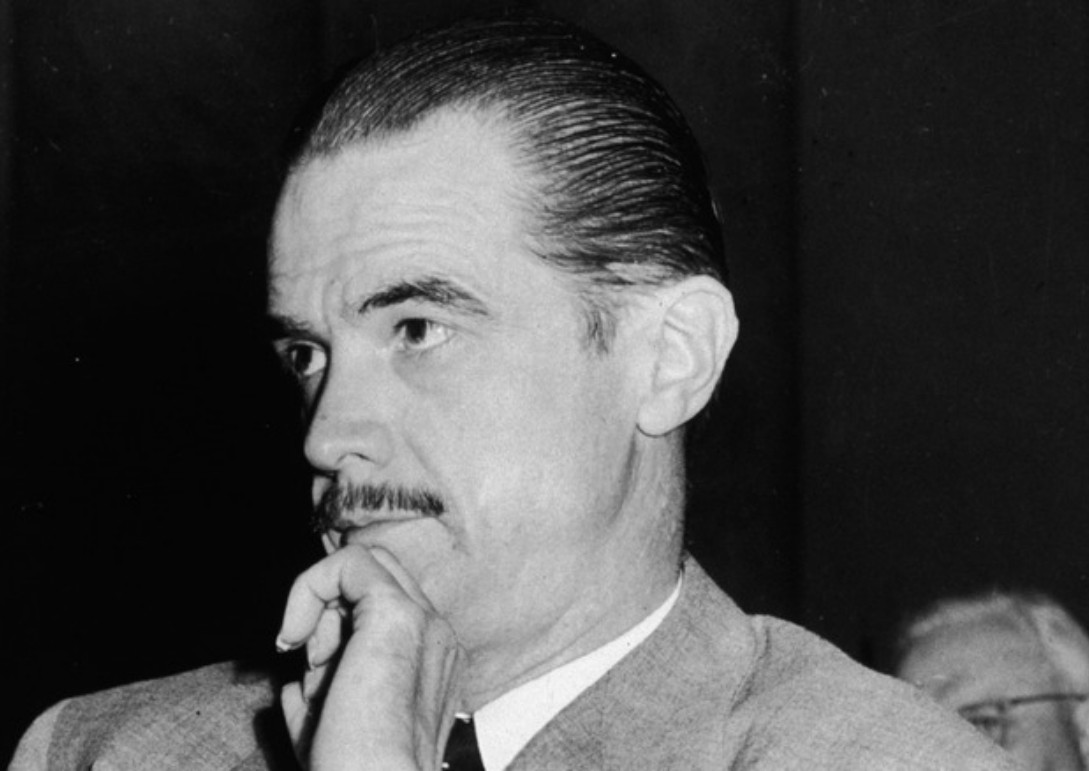
Howard Hughes, one of the most influential figures in American history, built a remarkable financial empire spanning aviation, aerospace, film, and real estate. This article delves into Howard Hughes Net worth, tracing his journey from a wealthy heir to a globally recognized business tycoon, aviator, and film producer.
From his early life and innovative contributions to aviation, including world records and the iconic Hughes H-1 Racer and Spruce Goose, to his Hollywood career producing notable films like Hell’s Angels and Scarface, Hughes’s life was defined by ambition, eccentricity, and reclusive behavior. We explore his expansive estate valued at $2.5 billion in 1976 ($11 billion today), key relationships, and enduring legacy through philanthropy, biomedical research, and the Howard Hughes Medical Institute (HHMI).
Howard Hughes Net Worth
Howard Hughes’s net worth has long fascinated historians and business enthusiasts alike. At the time of his death in 1976, Hughes’s fortune was estimated at $2.5 billion, equivalent to approximately $11 billion in today’s terms. His wealth was derived from a combination of inheritance, controlling interest in multiple companies, and strategic investments across diverse industries, including aviation, film production, and real estate.
Hughes’s financial empire included the Hughes Aircraft Company, Trans World Airlines (TWA), Hughes Helicopters Division, Hughes Aerospace Group, and Hughes Airwest, giving him a powerful position as a shareholder and visionary leader. His estate was meticulously structured, with holdings in hotels, casinos, and prime real estate in Las Vegas, Culver City, and Beverly Hills Hotel, cementing his reputation as one of the wealthiest Americans of the 20th century.
Howard Hughes Early Life and Career
Born in 1905 in Houston, Texas, Howard Hughes inherited not only significant wealth from his family but also an entrepreneurial spirit that would define his career. From an early age, Hughes displayed a fascination with mechanics, aviation, and technology. His upbringing in a wealthy family exposed him to financial management, laying the groundwork for his later ventures.
Hughes’s early career began in engineering and business management. He inherited a stake in the Hughes Tool Company, which provided him with a stable source of income and the initial capital necessary to launch his ambitious projects. Even in these formative years, Hughes demonstrated traits of perfectionism and eccentricity, foreshadowing his later reclusive lifestyle and obsessive-compulsive tendencies.
Howard Hughes Rise to Fame and Major Achievements
Hughes’s rise to fame was driven by his groundbreaking contributions to aviation and film production. As an aircraft engineer and pilot, he set multiple world records, developing innovative aircraft such as the Hughes H-1 Racer and the massive Spruce Goose (H-4 Hercules). These achievements not only showcased his technical prowess but also solidified his reputation as an aviation pioneer.
In Hollywood, Hughes made an indelible mark as a film director and producer, with classics like Hell’s Angels, Scarface, The Outlaw, and The Racket. These films were notable for their technical innovations, attention to detail, and bold storytelling, reflecting Hughes’s perfectionist approach. Simultaneously, his ventures in real estate and airlines, including acquisitions of Air West and Northeast Airlines, expanded his influence across industries.
Howard Hughes Personal Life
Howard Hughes led a famously reclusive and eccentric lifestyle, driven in part by his struggle with obsessive-compulsive disorder (OCD). He avoided public appearances later in life, lived in seclusion, and maintained strict control over his companies. Hughes’s personal relationships were equally high-profile, including romances with Katharine Hepburn, Ava Gardner, Jean Peters, and Ella Botts Rice.
Despite his seclusion, Hughes remained a formidable force in business, using his fortune to influence industries ranging from aerospace to hotels and casinos. His personal life, marked by reclusiveness and eccentric behavior, often made headlines and became part of his enduring mystique. Hughes died in 1976 from kidney failure, leaving behind an estate valued at billions and a complex legacy of business and innovation.
Hollywood Career
Howard Hughes’s impact on Hollywood was profound. As a film director and producer, he revolutionized aviation-themed films and introduced daring cinematic techniques. Some of his most notable projects included:
- Hell’s Angels: Known for its groundbreaking aerial sequences.
- Scarface: A bold take on organized crime in the 1930s.
- The Outlaw: Famous for controversial marketing and focus on female leads.
- The Racket: Highlighting Hughes’s meticulous attention to detail and story pacing.
Through RKO Studio and other ventures, Hughes demonstrated a remarkable ability to combine business acumen with creative vision, solidifying his dual reputation as a businessman and filmmaker.
Aviation
Aviation was central to Hughes’s identity and business empire. He achieved airspeed records, piloted experimental aircraft, and engineered planes that pushed technological boundaries. His most iconic achievements include the Hughes H-1 Racer, which set a landplane speed record, and the Spruce Goose, a massive cargo aircraft that remains a testament to his innovative vision. Hughes’s contributions influenced modern aerospace and commercial aviation, establishing him as one of the most influential figures in the industry.
Airline Purchases
Hughes strategically acquired and expanded airline companies to complement his aviation ventures:
- Trans World Airlines (TWA): Hughes gained controlling interest, shaping its operations and strategy.
- Hughes Airwest: Expanded regional airline coverage.
- Air West: Another strategic acquisition for market influence.
- Northeast Airlines: Integration into his airline portfolio.
These acquisitions not only enhanced his business footprint but also increased his fortune and control over the aviation market.
Real Estate
Hughes invested heavily in real estate, particularly in high-value properties:
- Las Vegas: Hotels and casinos, including Desert Inn.
- Culver City: Film-related properties.
- Beverly Hills Hotel: Iconic real estate investment.
His real estate holdings were part of a broader strategy to diversify his wealth, adding tangible assets to his financial empire and providing long-term revenue streams.
Relationships
Hughes’s personal life included relationships with Hollywood elites and socialites. Notable companions included:
- Katharine Hepburn: Renowned actress.
- Ava Gardner: Iconic Hollywood star.
- Jean Peters: Actress and eventual wife.
- Ella Botts Rice: Early relationship during business ascent.
These relationships contributed to his public image and intertwined his personal and professional worlds, though his reclusive tendencies intensified later in life.
Estate Battle
After Hughes’s death in 1976, his estate became the center of legal disputes due to its vast wealth and complex holdings. The estate valued at $2.5 billion required intricate settlement, involving inheritance claims, shareholders, and the distribution of his diverse financial empire, including Hughes Aircraft Company, Hughes Helicopters Division, and HHMI. These legal battles highlighted the scale of his fortune and the challenge of managing such expansive assets.
Legacy
Howard Hughes’s legacy extends beyond his wealth. He established the Howard Hughes Medical Institute (HHMI), an influential organization in biomedical research, demonstrating his commitment to philanthropy. His innovations in aviation, contributions to film, and investments in real estate and hotels have left lasting impacts on multiple industries. Museums and institutions, including the Smithsonian, preserve his achievements, ensuring that Hughes’s influence continues to inspire entrepreneurs, engineers, and filmmakers worldwide.
Conclusion
Howard Hughes’s life exemplifies the convergence of wealth, innovation, and eccentricity. With a fortune estimated at $2.5 billion in 1976 (approximately $11 billion today), Hughes built a diversified financial empire spanning aviation, film production, real estate, and philanthropy. His remarkable achievements—from world records in aviation to producing iconic films and acquiring strategic airline companies—demonstrate vision and ambition. Despite his reclusive lifestyle and personal struggles, Hughes’s enduring legacy lives on through his foundations, biomedical research initiatives, and the influence of his innovative spirit. Understanding Hughes’s life provides insights into how wealth, creativity, and determination can shape both industries and history.

Alan Abel is a naming specialist and author at BoldlyNames, with over five years of experience in name research and selection. He helps readers choose meaningful, culturally aware, and well-suited names for people, brands, and projects. Alan’s work combines practical insight, linguistic understanding, and real-world naming trends to deliver clear, reliable guidance readers can trust.